SESSION REPORT
WTO Public Forum 2026 | 17 September 2026 | Centre William Rappard Geneva
Green corridors will work only if they are treated as coordinated economic systems, not transport routes with an environmental label. The session examined how national institutions, regional corridor bodies, the AfCFTA and private actors can align transport, energy, trade, customs, standards, finance, digital systems, investment and skills. Cleaner infrastructure must be matched by services capacity, interoperable regulation and institutions able to deliver across borders.
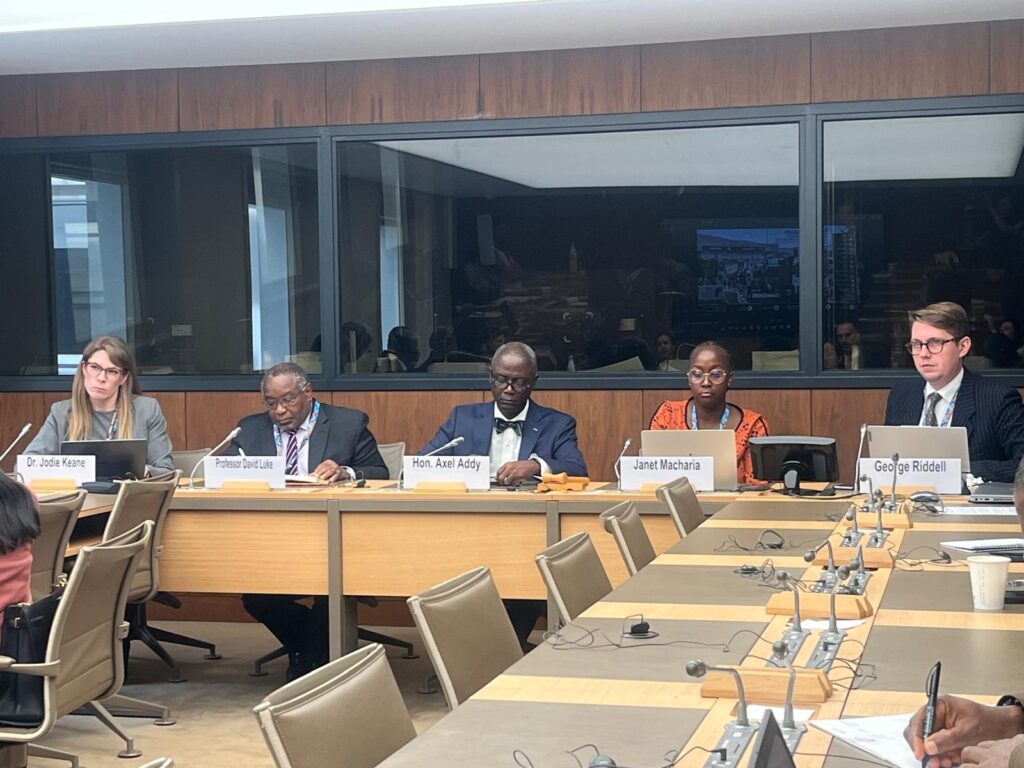
Moderated by George Riddell, the discussion brought together Professor David Luke, Hon. Axel Addy, Janet Macharia and Dr Jodie Keane. It connected regional corridor innovation, national implementation, the legal architecture for cross-border delivery, and the evidence on services trade and environmental outcomes.
Green corridors are systems not routes
Vehicles, ports, railways, vessels and charging assets are only the visible layer. Their deployment depends on engineering, project finance, testing and certification, maintenance, logistics, software and data, insurance, payments, environmental services, education and training. These functions are often divided among agencies operating under different mandates, timelines and systems. The result can be duplicated approvals, incompatible standards, weak project pipelines, higher trade costs and uncertainty for investors and service providers.
National delivery therefore requires a clear lead institution, structured inter-agency cooperation and a practical map of the permits, licences, standards and data requirements affecting each corridor. Digital single windows can improve transparency and reduce discretion, but only when agencies agree on common processes and exchange reliable information. Dialogue with corridor users – including transport operators, ports, utilities, financiers, technology firms, workers and SMEs – must be built into implementation.