THIS EVENT HAS FINISHED, WATCH OR LISTEN TO THE PLAYBACK BELOW
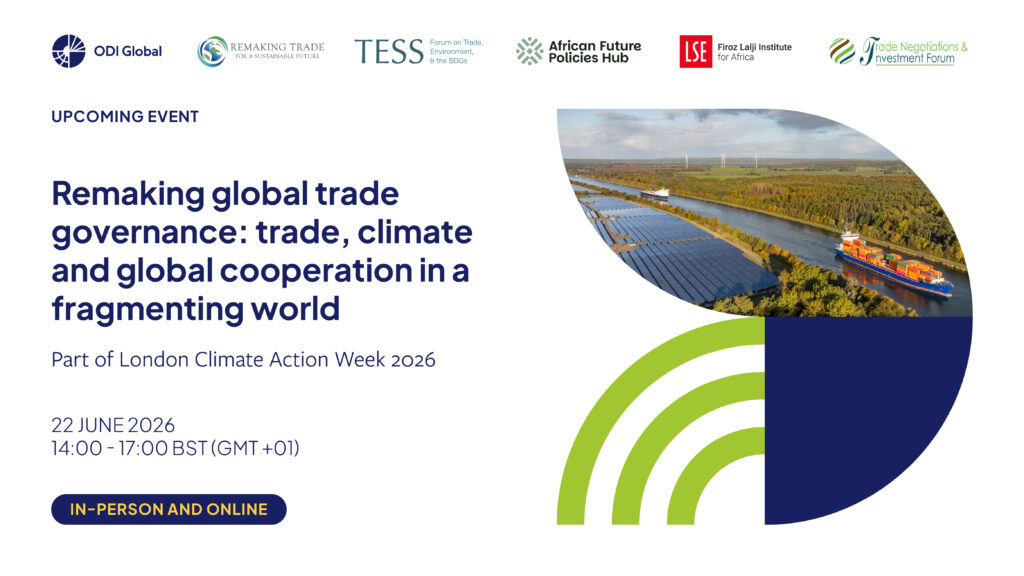
Date: 22 June
Time: (GMT +01) 14:00 17:00
Location: 12 Great George Street, SW1P 3AD
Part of London Climate Action Week 2026
As climate impacts intensified and geopolitical tensions reshaped the global economy, global trade governance entered a period of profound transformation.
Countries increasingly used trade policy to pursue climate, industrial and security objectives. While this shift created opportunities to accelerate the green transition, it also risked deepening fragmentation, straining multilateral institutions and exacerbating inequalities – particularly for developing countries facing structural constraints.
ODI Global, the Remaking Trade Project, the African Future Policies Hub, the Forum on Trade, Environment & the SDGs (TESS), the LSE Firoz Lalji Institute for Africa and the Trade Negotiations and Investment Forum (TNIF) convened a high-level conversation during London Climate Action Week 2026. The event brought together policymakers, trade experts, academics and private sector representatives to explore how global trade governance needed to evolve to remain inclusive, sustainable and equitable in a multipolar world.
Our Partners




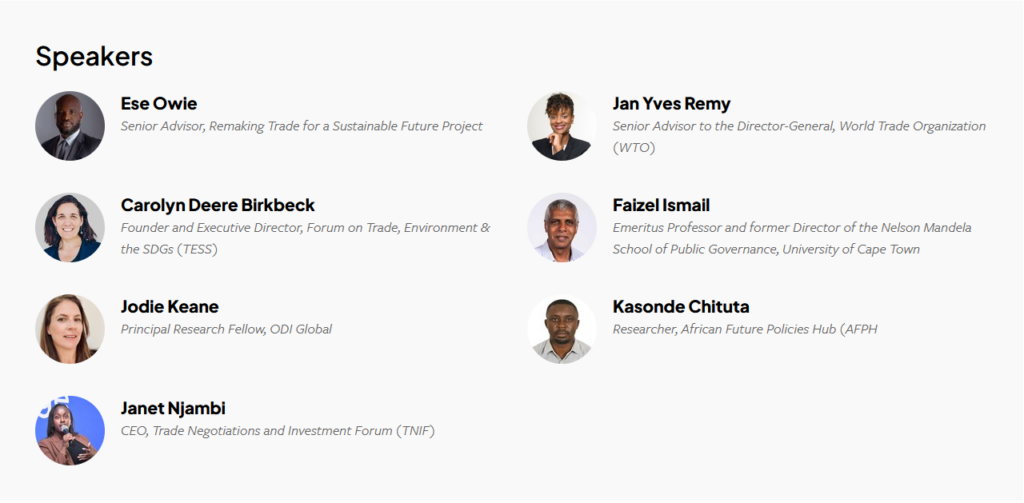
More speakers to be confirmed.
Schedule
Registration and welcome refreshments
Welcoming and opening remarks
Event overview and scene-setting
Session I: Trade, climate and security in a multipolar world
Climate change, economic security and trade policy are becoming increasingly intertwined. Governments are challenging established trade norms in pursuit of strategic autonomy, green industrialisation and control over critical minerals and clean technologies. Alongside, there is growing recognition among a diversity of governments on the importance of trade strategies for achieving their climate goals, including enhanced cooperation on trade and trade policies as key to driving action on climate mitigation, adaptation and climate-resilient development.
This session will examine:
– What rising fragmentation means for climate action, sustainable development and the global trading system
– The implications of trade-related climate measures for developing countries and how trade-related cooperation on climate can be enhanced
– Prospects for WTO reform and attention to sustainability priorities in a shifting geopolitical landscape
– The growing role of regional and plurilateral trade initiatives as laboratories for cooperation on climate and trade
Networking coffee break
Session II: Border carbon adjustment mechanisms – balancing climate ambition and development
With the European Union’s Carbon Border Adjustment Mechanism (CBAM) entering full implementation in 2026 and the UK’s CBAM due to become operational in 2027, border carbon measures are rapidly reshaping global trade. While designed to prevent carbon leakage and support decarbonisation, CBAMs have been criticised as potentially protectionist and risk imposing new burdens on developing country exporters.
This session will explore:
- How the UK can design and implement its CBAM in a way that supports development alongside climate ambition
- How developing countries can navigate and respond to the rise of sustainability-linked trade measures
- Strategies to mitigate the risks of regulatory fragmentation and overlapping reporting requirements
- The intersection of CBAMs with emerging economic security strategies
Closing remarks
Networking reception